

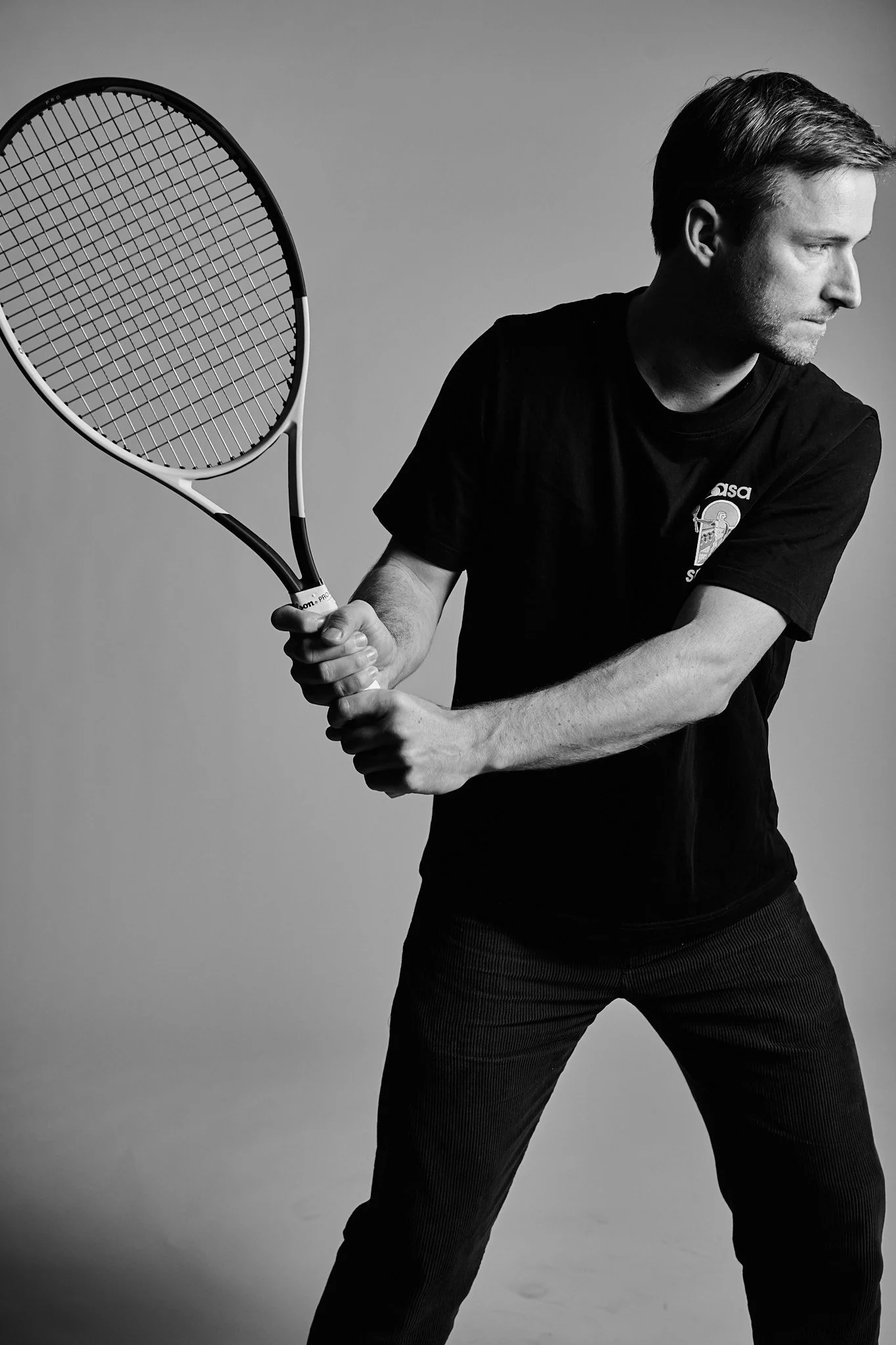
Tennis Beyond Mechanics
There are two learning approaches
Approach 1: Memorize positions. Think your way into every movement. Force results.
Approach 2: Understand the why. Develop awareness. Feel motion as a whole.
Most players are on Approach 1, because it's the more familiar way to learn. It's all about using recipes. On the surface these instructions might make sense. But they don't work well when you don't understand how they connect to the big picture. True skill can only come from knowing the ins and outs.
Let's look at an example. A long arm extension upon contact is common advice for tennis players. So the student is thinking about extending their arm. While they're micromanaging their arm's movements, they have fewer mental resources to notice other things. What happens when they let the ball get close to their body? Can they physically extend their arm?
Approach 2 is the path of alignment, seeing how everything connects. There is no part without the whole, and the whole is in every part. Your arm will naturally extend if you understand two things: that your body needs space to move freely, and that the ball only responds to the motion you give it. Finding the space and hitting through the ball is what you'll focus on. The extension happens on its own, simply because the movement to connect with the ball will demand it.
This Course Teaches the Why
These video lessons share the knowledge that helped me become a top-ranked junior player and go on to play Division I college tennis on a full athletic scholarship, where I had an 18-1 record, earned 7 ATP points, and played a close match against a top 130 ATP ranked player at a challenger.
After years of coaching, I saw that when students pay attention to the fundamentals and how these connect to the rest of the game, they learn to strike the ball with clean technique, play points creatively, and find joy in the learning process.
With this course, you'll understand motion and learn the fundamentals that make every shot possible. You'll see the big picture, how everything connects, so you can play intuitively.
✓ Lifetime access ✓ Future updates included
Instructions that come as a to-do list without context clutter your mind. Understanding the why is what truly makes the difference, and once you know it, you'll never stop improving.
The Price
One $137 payment, or 4 × $37/month
For a single payment, you get access to a course that shows you how tennis actually works.
This is knowledge, and knowledge can't be returned. Watch a few free lessons first.
If they speak to you, the course will too.
Course Content
-
Tennis Beyond Mechanics
-
Motion: The Core Engine
Whether you're a beginner or a pro, you're always working with motion, space, and timing. The difference is only in how much they vary. Once you see tennis as playing with motion, learning it gets simpler.
-
Introduction to the Game and its Fundamentals
Every player has their own style, but underneath it they all rely on the same fundamentals. This intro lays out why fundamentals never change, why they're the building blocks everything else rests on. I also talk about two principals, connectedness and alignment, that will help you make sense of everything that follows.
-
The Way Motion Works
The tennis ball never moves on its own. It only responds to the motion you give it, following the same consistent laws of physics every time. Here's why that consistency is exactly what makes tennis learnable, with an introduction to the elements behind every shot: speed, mass, and direction.
-
Motion, Space, and Timing
Your body needs room to move, and timing is how you get that room. This video explains how space and timing decide which shots are even available to you. And why meeting the ball where you can swing freely is the difference between having options and being limited.
-
Aligning Your Movements
Power and control come from the whole body, not the arm. A single arm is only about 5% of your mass, so when you use the ground and your full body together, you hit a heavier ball with less effort. And get a steadier swing as a result. This video covers the kinetic chain, why arm-only shots fade, and how directional conflict pulls your shot off target.
-
Foundations: Attention, Movement, Weight Transfer, and Contact Point
Without attention, you don’t see what the ball is doing.
Without movement, you don’t get into position to strike the ball.
Your body in motion transfers weight to generate force.
If you don’t connect with the ball, well, you know.
-
Spacing and Timing
Every shot will feel natural if you find the space and time the weight transfer without losing balance or feeling constricted.
-
Relax into the now
Tension is a limiter. Relaxation lets you feel, gives you speed and power, and allows you to express yourself and hit the kinds of shots you like.
-
Attention is your superpower
Your attention to what is taking place moment to moment is how you receive the flow of information in real time. Any thoughts or intentions in your mind divide your attention from the moving ball and from being aware of what you’re doing with your body.
-
Movement - The Most Important Part of Your Game
Your improvement on the tennis court is highly correlated with how much attention you give to your footwork. Movement helps you get in position, you can only adjust to what you see through movement.
Pro tip to help you remember to keep moving your legs: write “Move” on your grip :)
-
Weight Transfer
You’ll get it once you understand what weight transfer means and where the motion for it begins (hint: your legs).
-
Rotation is part of your weight transfer
Rotation before striking the ball is essential for transferring the power you generate from the ground.
It also plays an important role in accelerating your swing and body motion, adding force to the ball.
-
Your Back Leg for Weight Transfer & Stability
Where the motion of your body begins will impact how much mass is transferred. Understand that the back leg is key to ensuring stability and power as you strike the ball. Connecting with the back leg on every shot is one of those habits that will amplify your game.
-
Contact Point - Your Moment of Truth
The contact point is fundamental. That’s where your transfer takes place and you tell the ball what to do.
-
Follow-Through
A complete follow-through gives you the space to swing fast and commit to your shot.
-
Controlling Your Swing Path
When the body loses balance or unexpectedly shifts during a swing, it often alters the swing path we originally intended. This can be minimized by keeping your body balanced and your mind present with the act of striking the ball, rather than the outcome to come.
-
Progressions for natural development
Progressions are a way of life. We learn to crawl before walking, then we run. Develop your skills naturally by playing at speeds and spaces where it’s manageably out of your comfort zone.
-
Efficiency: Lead with your legs
Lead your setup and recovery with your legs. When you lead with your legs, your entire body moves as a single unit, which is far more efficient than letting your arm lead while the rest of your body follows.
-
The Form Between Your Shots
After you hit your shot and before the other player hits theirs, you don’t know where the ball will go next. You must take up a form that is optimal for being ready to set up for the next shot. That’s the ready form (or position). It’s simple to understand, and there’s no reason you can’t master it like a pro player. All that’s required is to connect with deliberate feeling.
-
Split Step
The split step helps you time your change of direction efficiently. The cue is when the other player begins their swing to hit the ball. By the time they make contact, you’ll have reset your inertia and be ready to move toward your next shot.
-
Don't Sweat the Technique
Working on your fundamentals will make it easier for you to develop clean technique. All the videos here are designed to help you naturally align your body with the laws of physics.
-
-
Essential Movement Transitions
-
Consistency Drills
-
Why Consistency Drills Matter
Consistency drills helped me reach the top junior rankings in the world and receive multiple full-ride offers from top-ranked Division I colleges. We practiced them daily for several years. They helped me develop clean technique, good movement habits, and confidence.
-
The right approach to consistency training
If you can't keep the ball in play when you're not under pressure, then you're facing an issue with your form, focus, or both. The training tips in this video will show you how to make the most of consistency drills and what to focus on so that you can develop clean technique, great form, and actually learn how to control the ball. Once you feel comfortable controlling the ball at normal speeds, then you'll have a lot more confidence when you play points.
-
Counting Rules
Short counting rules to help you stay on track with purpose.
-
Progressions in Tempo and Variation
Learning to control your shots at higher speeds is a gradual process. You also benefit from learning to vary your shots and adapt to whatever comes your way.
-
First Set of Service Box Drills
The first set of consistency drills is played in the service box. Here is where you find the time to learn good form and ball control. I used to do them every day for several years, and I have seen many players, such as Kei Nishikori (U.S. Open finalist), practice in the service box for at least 30 minutes before moving on to the baseline.
-
Service Box Movement Drills
Tennis is all about movement. When you’re comfortable moving and controlling the ball, then you’re better equipped to play.
-
Baseline Cross-Court
You need to be comfortable hitting deep cross-court shots when you're not under pressure. This video explains the benefits and what to focus on.
-
Baseline Down-the-Line
Hitting down-the-line accurately is not as easy as it looks. It takes a lot of practice. After a few months of consistency training you will have the confidence to take the ball up the line with precision.
-
The Ultimate Drills with Movement
Movement drills are the bread and butter of tennis mastery. The more comfortable you are at controlling the ball while being moved around, the better you will play.
-